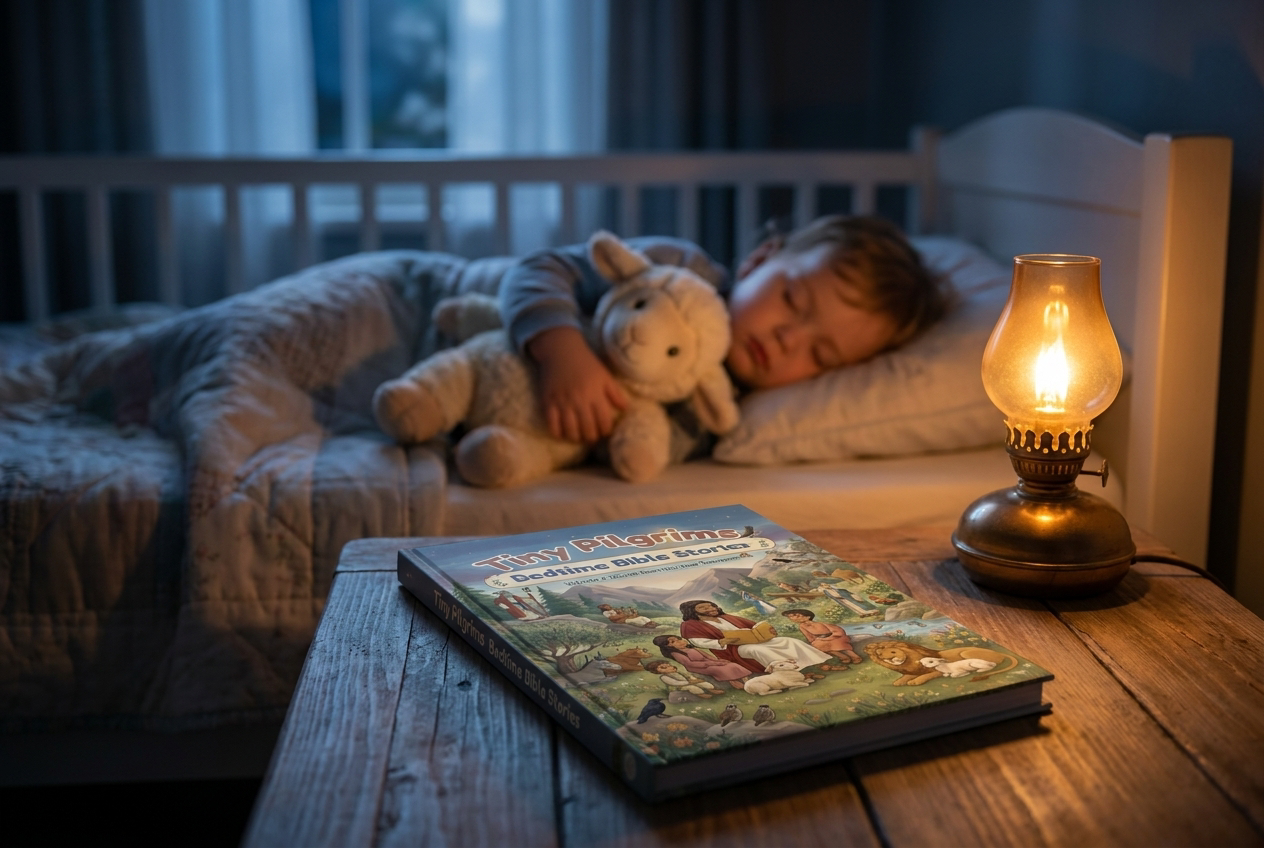
Ask ten parents for the best Bible stories for kids and you'll get the same five answers: Noah, David, Daniel, Jonah, Christmas. All wonderful. But a four-year-old and a ten-year-old need different stories — and a child at 7:30 p.m. needs a different story than the same child on a Saturday morning.
Here are thirty, organized the way parents actually need them: by age, with a note on which ones send kids to sleep and which ones wake them up.
Ages 2-4: stories about being safe
Toddlers don't follow plots; they follow feelings. The best first stories are the ones where the world is made, animals are everywhere, and God keeps people safe.
- Creation (Genesis 1) — light, sea, stars, animals, you. The gentlest possible introduction to God.
- Noah's Ark (Genesis 6-9) — animals two by two and a rainbow promise. The first "God keeps us safe" story.
- Baby Moses (Exodus 2) — a baby kept safe on a river. Toddlers feel this one deeply.
- The Lost Sheep (Luke 15) — one little sheep, one shepherd who won't stop looking.
- Jesus and the Children (Mark 10) — "let the little children come to me." Every small child should hear this one early.
- The First Christmas (Luke 2) — a baby, a star, animals around a manger. Perfect at any age, magic at three.
Bedtime picks: all six. This entire age group should get sleepy stories — save the drama for later years.
Ages 4-6: stories about being brave
Preschoolers are ready for a little tension, as long as it resolves safely. This is the golden age for the Bible's rescue stories.
- David & Goliath (1 Samuel 17) — the one every kid asks for again. Daytime story; nobody gets sleepy after a giant falls down.
- Daniel in the Lions' Den (Daniel 6) — scary for a page, then the safest morning in Scripture. Surprisingly good at bedtime.
- Jonah and the Big Fish (Jonah 1-3) — running away, being found, second chances.
- Joseph and His Coat (Genesis 37-45) — jealousy, forgiveness, and a brother who feeds his family. The Bible's best family story.
- The Storm on the Lake (Mark 4) — Jesus asleep in the boat, then "peace, be still." The single best bedtime story in the New Testament.
- Joshua and the Walls (Joshua 6) — marching, trumpets, and walls that fall down. Daytime. Very daytime.
- The Good Shepherd (John 10) — pairs with The Lost Sheep; now they're old enough to hear that they're the sheep.
Ages 6-9: stories about doing the right thing
School-age kids have a fierce sense of fairness. Give them the stories where character matters.
- Ruth (Ruth 1-4) — loyalty when leaving would be easier.
- Esther (Esther 2-8) — a queen who risks everything to speak up. "For such a time as this" lands hard at eight.
- Gideon's 300 (Judges 7) — winning with less, on purpose.
- Solomon's Wisdom (1 Kings 3) — ask God for wisdom, not stuff.
- Elijah on Mount Carmel (1 Kings 18) — one prophet vs. 450, and fire from heaven. Daytime.
- The Good Samaritan (Luke 10) — who is my neighbor? The story kids apply at recess tomorrow.
- The Prodigal Son (Luke 15) — you can always come home. Read it the night after a hard discipline day; it says what you can't.
- Zacchaeus (Luke 19) — the small man in the tree, and dinner that changed him.
- Feeding the Five Thousand (John 6) — one lunch, shared, becomes enough for everyone.
Ages 9-12: stories about the whole story
Preteens can finally see the arc — that all of these stories are one story. Fill in the connective tissue.
- Abraham's Promise (Genesis 15) — stars in the sky, and the promise everything else hangs on.
- The Ten Commandments (Exodus 20) — now they're old enough to ask why rules are a gift.
- Hannah's Prayer (1 Samuel 1) — praying for something for years. Preteens know about waiting.
- Shadrach, Meshach & Abednego (Daniel 3) — "even if He does not." The bravest sentence in the Bible, for the age that's starting to feel peer pressure.
- The Last Supper (Luke 22) — the night everything was given a meaning.
- The Empty Tomb (John 20) — the morning that makes it all true.
- The Road to Emmaus (Luke 24) — the risen Jesus, unrecognized, explaining the whole story. The perfect capstone: now they can see how it all connects.
- Pentecost (Acts 2) — the story isn't over; it includes them.
What order should we read them in?
For a first pass with young kids: any order. Read what calls to you tonight — familiarity beats sequence under age six.
From about age five, read them in Bible order, Old Testament then New. The promises come first, then the rescue. Kids who hear it that way don't experience the Bible as a pile of fables but as one story that was going somewhere all along.
The bedtime rule of thumb
One filter saves every parent: does this story end calm? Creation, the Lost Sheep, the Storm on the Lake, Daniel's quiet morning — bedtime. Goliath, Jericho, Mount Carmel — afternoon. A story that ends in cheering is a wonderful thing at 4 p.m. and a mistake at 8.
That filter is actually why our storybooks exist: all 60 stories in the Bible Bedtime Stories set are told to end calm, each closing on a Goodnight Prayer page — a verse, a simple truth, a wondering question, a short prayer, and a goodnight whisper. The wind-down is built in, so any story is safe at 8 p.m.